

Introduction
It’s April the 8th, 2012, Easter Monday in the liturgical calendar of the Roman Catholic Church, and the ninety-sixth anniversary of the 1916 Easter Rising.
Nine decades ago, on the morning of Easter Monday, April 24th 1916, some 1250 men and women belonging to several Irish republican organisations came together in Dublin city and county with the intention of spearheading a general insurrection against British colonial rule across the island of Ireland. Orchestrated by a secret revolutionary movement, the Irish Republican Brotherhood (popularly known as the Fenians), the separate groupings which took to the streets of the capital, and a number of provincial towns and districts, were to influence the history of Ireland, and the United Kingdom, for much of the next century. They included,
The majority Irish Volunteers (IV), a republican and nationalist militia originally established to secure the fulfilment of a British government promise of so-called “home rule” or limited autonomy for Ireland within the then “United Kingdom of Great Britain and Ireland”.
The minority Irish Citizen Army (ICA), a republican and socialist militia created to defend workers’ rights and later to campaign for the establishment of an independent socialist republic in Ireland.
The small Cumann na mBan (CnamB), a republican and nationalist feminist grouping campaigning for universal suffrage and women’s rights, which quickly took on the characteristics of an all-female militia.
The popular Fianna Éireann (FÉ), a nationalist scouting movement initially intended to channel youthful energies into matters cultural and athletic but which became imbued with republican sentiment.
The relatively tiny Hibernian Rifles (HR), a nationalist “shooting-club”, a polite euphemism for an armed militia whose prime objective was to defend nationalists against attack if some form of substantial legislative devolution was delivered to Dublin by London.

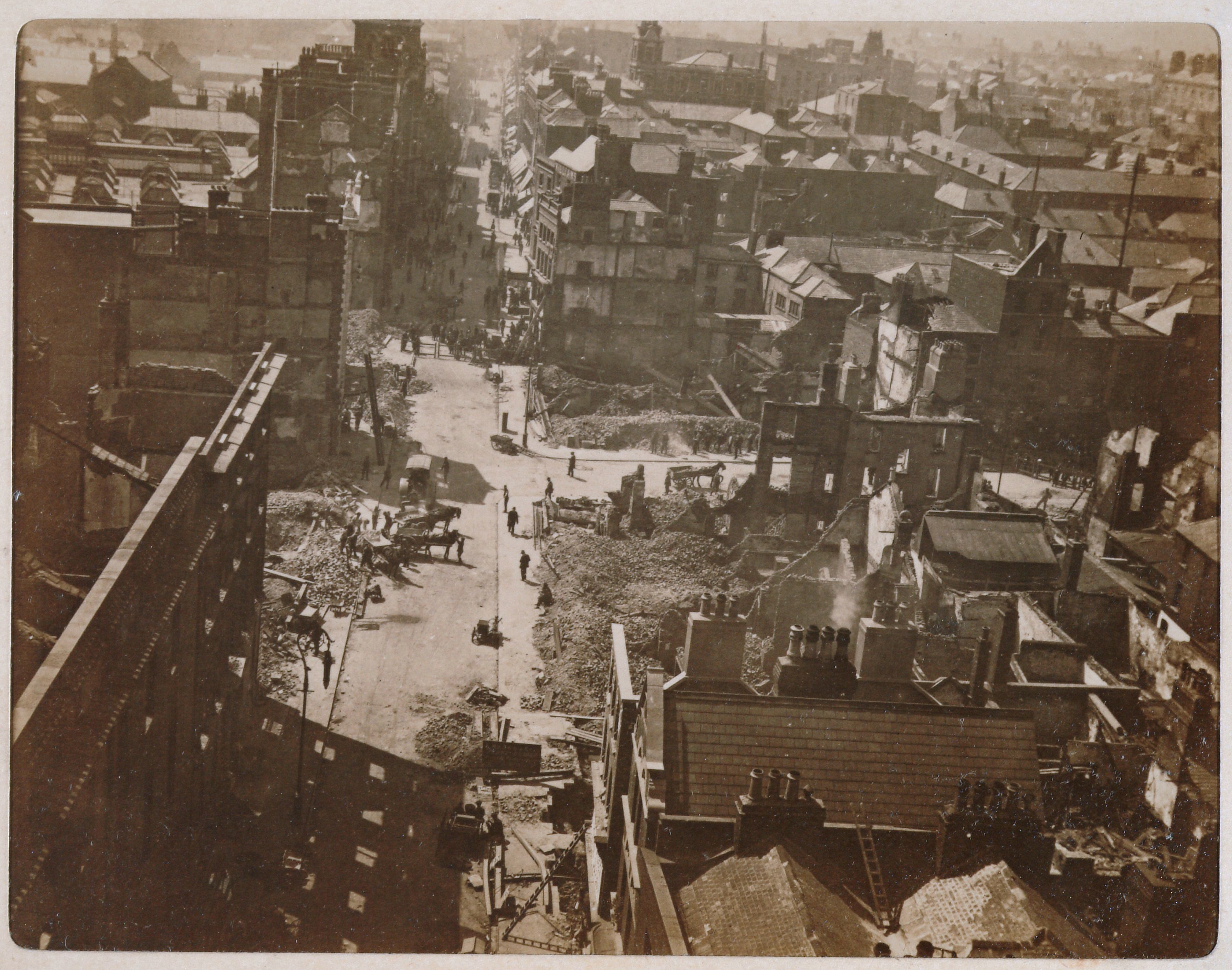
Nominally uniting as one, these organisations formed the core of a new Army of the Irish Republic, or the Irish Republican Army (IRA), the purpose of which was to defend a unilateral Irish Republic proclaimed by the leaders of the revolution outside the General Post Office or GPO in Dublin. Seven of these men now comprised the Provisional Government of the Irish Republic with its administrative and military headquarters in the GPO itself. Unfortunately confusion over the timing and nature of the uprising meant that a national insurrection failed to materialise outside the capital and instead a number of isolated, ill-equipped risings took place around the country (mainly in the counties of Waterford, Wexford, Meath, Louth and Galway). Following several days of intense street-fighting during which much of Dublin’s urban centre were laid waste by British ground and naval artillery, the forces of the Republic in the capital surrendered. Shortly thereafter armed operations around the rest of the island also came to a halt. Bar some random sniping and the occasional violent confrontation the would-be revolution was over.
How People Viewed The Rising
The reaction of the general public in Dublin, the centre of Anglo-British rule in Ireland for some 800 years and the most thoroughly colonised region of the nation outside of the province of Ulster was decidedly mixed. Within the local unionist population (in broad terms, Protestants and Roman Catholics who identified themselves as Irish and British, or exclusively British) the feeling was one of hostility to the “rebels” and continued support for the UK’s authority over the country. Since this colonial-class minority was closely invested in the continuation of British rule to protect its privileged political, socio-economic and cultural standing it was the one that was the most vocal in its expressions of loyalty, and calls for “retribution” against the “traitors” and their supporters. Indeed during the latter stages of the insurrection “loyalists” in the more salubrious southern suburbs of the city cheered and applauded British reinforcements during their disembarkation at the seaport of Dún Laoire (then called, Kingstown) and their advance upon the capital. This was mirrored in the verbal and physical hostility shown to captured or surrendered insurgents when they were marched through majority “pro-union” working- and middle-class districts of Dublin to temporary holding areas.
On the other hand the reaction of the majority nationalist community in the county (again in broad terms, Roman Catholics and Protestants who identified themselves as Irish or Anglo-Irish) was much more complex. Unbroken British rule in one form or another since the 12th century had inculcated in the population a respect for the might and mastery of “Greater England”: not just in Ireland but across the globe (a belief encouraged by the imperial UK state itself through most aspects of its public life). The idea that the Irish people could successfully rise up in arms against the authority of the world’s dominant power seemed incomprehensible to most ordinary Dubliners and to many of their compatriots elsewhere in the country. The majority simply could not conceive of such a thing, no matter how steeped in tales of “rebellion” and resistance their childhoods may have been. Living in the ordered tyranny created by Britain’s colonial administration on the island, where the conspicuous presence of the UK’s locally garrisoned paramilitary and military forces – usually filled with fellow Irish – was a daily reminder of rulers and ruled, few could imagine any other state. Just as importantly, several generations of people had come to believe, through centuries of denigration, that the Irish as a race were “unfit” to govern themselves; that they were emotionally and intellectually ill-equipped for such a challenge.
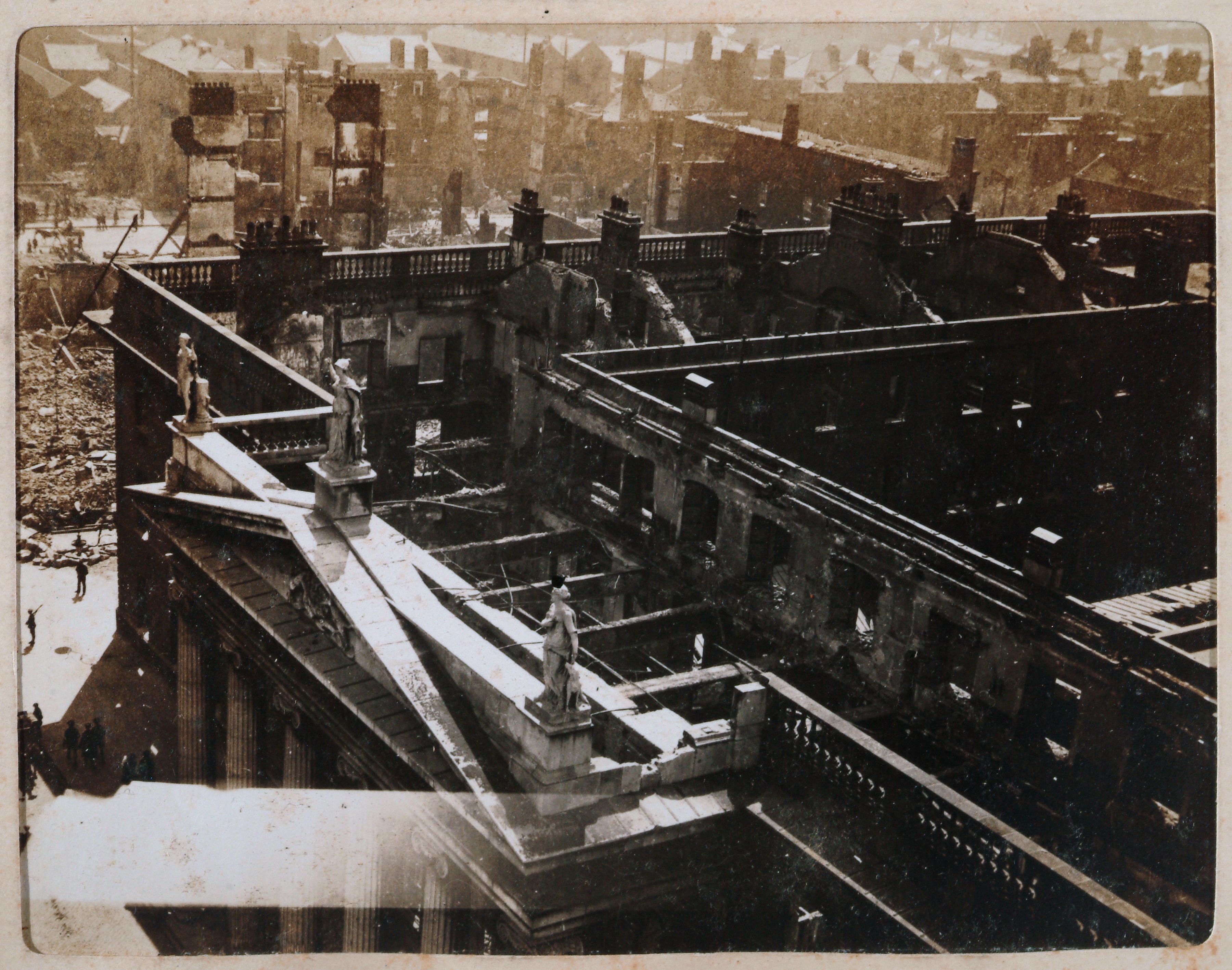
Fearing the reaction of the imperial government in London to the “rebellion” (and with good reason given the traditional savagery of past responses) many in the nationalist community adopted a wait-and-see approach to the attempted revolution. With the Great Famine of 1845 to 1852, the Fenian Rising campaigns of the 1860s, ’70s and 1880s, the Land War from the 1870s to early 1900s, and of course the Great Lockout of 1913-14, still fresh in many personal and folk memories, individuals and families instinctively knew that those labelled as “traitors” or “treasonous” in their actions by the colonial authorities would find themselves persecuted or ostracised into destitution or worse. The mass retributions and collective punishments of the past, the imprisonments, the banishments, and the state-sanctioned killings, quasi-judicial or otherwise, were the stuff of Irish nightmares in the first decades of the 20th century.
Yet, despite the apprehensions and risks outlined above, the records of the Easter Rising are replete with accounts of otherwise uninvolved men, women and children staking their freedom or lives to help the revolutionaries inside the capital and beyond. Furthermore private memoirs of the time reflect the range of people who lent aid or succour to the insurrectionists, a phenomenon which seemed to cut across class divisions and lines. From labourers to managers, washerwomen to nurses, students to teachers, hundreds of people did what they could when they could to aid the cause of the fledgling republic. Many of these acts of valour took place at a time when knowledge of the first British atrocities was already beginning to spread; when civilians were being murdered in different parts of the city by advancing troops; when suspected “rebels” were being executed on the spot by blood-thirsty, infuriated or simply confused officers and soldiers; and when buildings in the city-centre and neighbouring working-class districts were being pounded to blazing rubble by artillery and machine gun fire.
In contrast to the affluent southern suburbs of Dublin, in a handful of the more impoverished, nationalist-leaning areas of the inner city and northern reaches the long lines of captured “traitors” were cheered by crowds who refused to be cowed by the threatening khaki-clad soldiers and bottle-green RIC and DMP policemen. Here and there groups of women and girls would rush forward pushing little parcels of food or clotheing into the hands of the bewildered prisoners, hurriedly withdrawing as bayonets charged towards them. Occasionally a wounded man or a teenage boy would be dragged or carried away as a section of crowd surged forward, to disappear into the warren of back streets and alleyways to the fury of the military escorts. Across the capital dozens of revolutionaries relied on the sanctuary offered to them by ordinary people who hid the fighters in cellars and attics, sheds and outhouses, as the British and their Irish collaborators went from home to home, street to street, seeking the besieged and the forgotten. For reinforcements entering the city proper during the latter hours of the Rising the sullen, uncooperative population and a overt hostility in some districts was a source of puzzlement and anger.
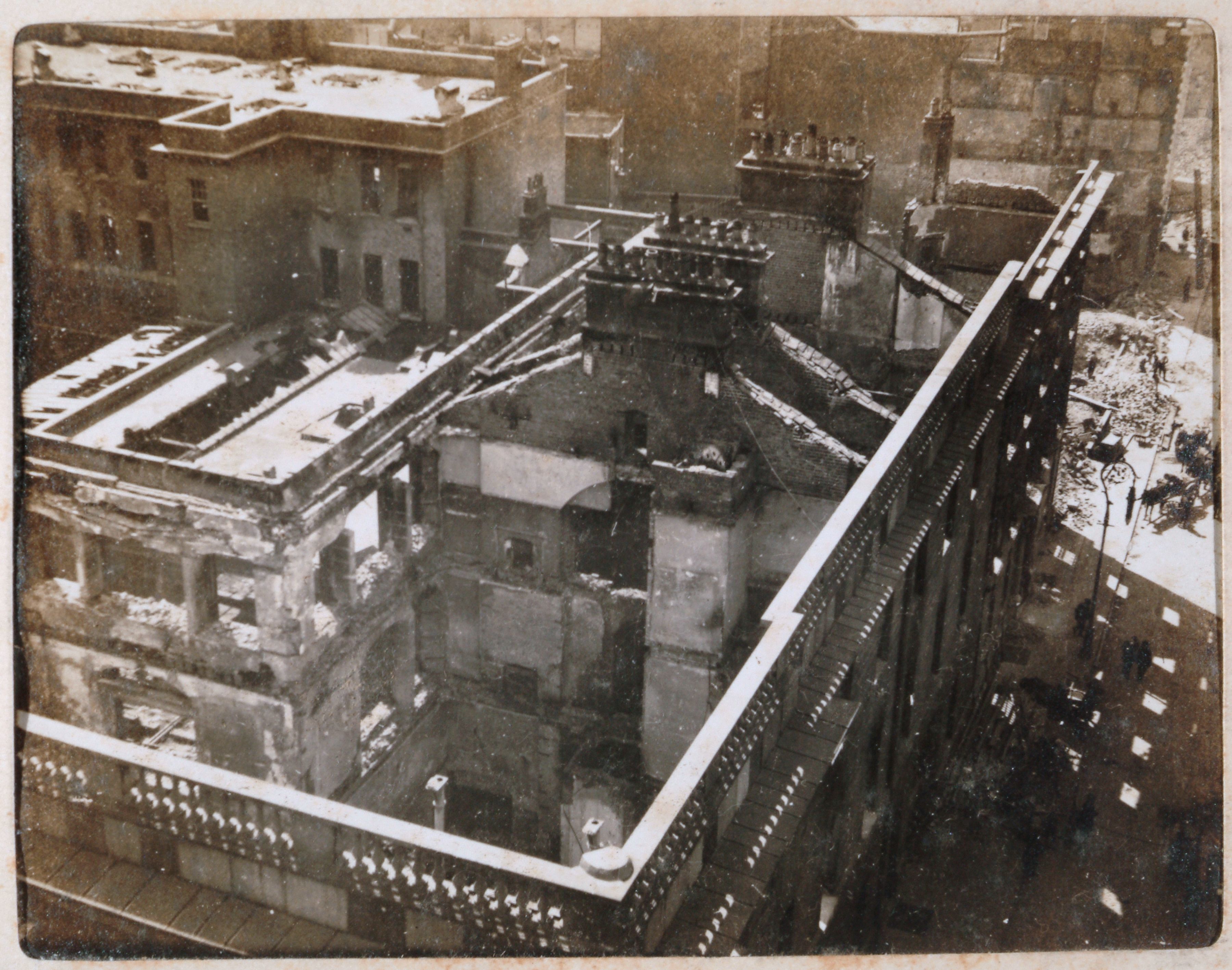
Outside of Dublin, in those rural areas where the British writ did not run so deep or so firmly, the civilian population was much more vocal in its support for the revolution. In Galway and Wexford, in small villages and parishes, the scattered fighters were greeted as an army of liberation by some while those who enforced the UK’s laws barricaded themselves in their fortified barracks or fled to the nearest military outposts. Only when the news of the surrender by the Provisional Government in the capital reached them did local people in country districts retreat into their customary guise of silence when faced by outside authority so as not to be singled out for retribution by the Occupier and his many, many servants. However, here – as across the island – the “rebels” found a forgiving reception, and many young men simply discarded their equipment when all seemed lost, returning home to their families and communities who closed ranks around them.
The Myths of 1916
The great myth of the Easter Rising is the claim that the decision by the British military authorities, supported by the government and parliament of the United Kingdom, to execute the members of the Provisional Government of the Irish Republic and other principal figures who participated in the insurrection was the sole reason for the sudden turn in public opinion in Ireland in favour of the revolutionary “martyrs”. The implication is that before the retributive deaths by firing squads the people as a whole were opposed to the “rebels” and were accepting of the need to put down the “criminal rebellion”. However as we have seen this was not the full truth.
The strategic failure by Britain in April and May of 1916 was not that it ignored the wishes of the Irish people and executed sixteen notable individuals associated with the insurrection, poets, playwrights, teachers and activists, over the course of two weeks and more but rather that it listened to the wrong Irish people. The UK’s military commanders and politicians, already convinced of the need for a public show of strength in relation to the leaders of the “Sinn Féin rebellion”, simply required enough public encouragement and momentum to proceed with the shootings. In Ireland they found that drive among many prominent and respected figures representing the unionist minority, a colonial class which dominated the locally raised British military and paramilitary forces, the judiciary, the imperial administration, major businesses and banks, the landed aristocracy, and above all the media elite of the time: newspaper journalists, editors and owners.
By urging “firm and resolute” action against the “chief rebels” unionists were expressing their loyalty to the existing order while protecting and securing their own place in it. Many genuinely believed that in the aftermath of the killings the island’s position in the “United Kingdom of Great Britain and Ireland” would be secured forever more. To some the insurrection had been a blessing in disguise and now the people of Britain would see the deceit and untrustworthiness of the “native, Catholic, Gaelic Irish” and that the limited reforms of previous decades needed to be undone. Most expected the UK to impose military conscription upon Ireland in order to force tens of thousands of men into the ranks of the Imperial Armed Forces to fight in the trenches of Europe and Asis Minor, and that the nationalist politicians of the country would once again be rendered mute and ineffective. In such a scenario the risible form of partitioned home rule offered to the country would be abandoned and the union made closer still.
However, as we know, history took quite a different turn. Britain’s representatives in Ireland eventually realised their mistake in listening to the advice of their “West British” co-nationals and within eight years the unionist population in four-fifths of the nation would be abandoned to its own fate. The historic British colony on the island of Ireland would be reduced to a besieged rump centred in “north-east Ulster” where an “ethnically” and politically pro-union population would be artificially transformed into a regional – if tenuous – majority. But that, as they say, is another story.
Suggested Links
If you want to learn more about the Easter Rising of 1916, the National Library of Ireland maintains a permanent online exhibition, The 1916 Rising: Personalities and Perspectives. You can view the flash-site or view individual guides in PDF format here.
Some more interesting sites are:
The Irish Volunteers Commemorative Organisation
The Proclamation of the Irish Republic: Notes From Dublin
The Irish Rebellion of 1916 and its Martyrs: Erin’s tragic Easter
Sinn Féin Rebellion Handbook, Easter, 1916
The Pursuit of Sovereignty & the Impact of Partition, 1912–1949
 AN SIONNACH FIONN
Excellent article. Very useful for me. My greetings from Caracas, Venezuela. You have a beautiful blog.
LikeLike
Thank you. I try! 😉 Enjoy…
LikeLike
History is always interpretation around some facts and I liked your attempt to get into the minds of ‘nationalist Ireland’ and to capture the atmosphere of the time. I also knew that the version that it was the executions alone that turned the emotional tide towards the insurrectionists could not be entirely true, on the evidence of the forces supporting the workers during the Lockout 3 years earlier alone. But we have been lacking evidence with which to counter the official line (all except one Canadian journalist’s report) and sadly you don’t give any sources for yours.
Also, “nationalist Ireland” included Murphy, owner of the Irish Independent newspaper; while the unionist Irish Times called for the insurgent leaders to be punished, the Independent called for them to be EXECUTED.
A factor to be taken into account in understanding the thinking of Britain’s rulers, the British soldiers and those colonially-minded Irish is that Britain was at war. The rising in what had been a century earlier the UK’s second city during a war of tmust have seemed like a stab in the back. For Britain’s rulers, it had to be crushed quite quickly, lest it gather support in Ireland, in British colonies and even among British workers. That alone would explain their ruthless bombardment.
LikeLike
Hi Diarmuid, I’ll try and rustle up specific stuff for you but many records of the period and recent histories refer to the general situation I describe. We are so used to interpreting things one way viz. 1916 because of the folklore around it and the agreed revisionist narrative. Go back and read personal accounts and it starts to look much more complicated and nuanced. Dublin was a city divided, a proto-Belfast as it is now, albeit with less of a divide and sectarianism. However imagine Belfast after a 2016 Rising. Would we interpret Unionist mobs howling for blood as equalling 100% opposition to an insurrection? Or would the situation be far more complex?
And note the almost universal support for the 1916 Rising outside Dublin in terms of local communities. Yes the Redmondite INV were opposed and aided the British in some areas but local people actively or passively supported it.
LikeLike
Ar ndóigh, all that you say is true but some of it at least is rational speculation. I share that speculation myself. And I know from experience how the same situation can appear completely different to different people (or even to one person from one moment to the next. I am just bemoaning the lack of documentary evidence …..
LikeLike
True. A lot of stuff is out there but getting it all together is the work of a trained historian.
LikeLike