
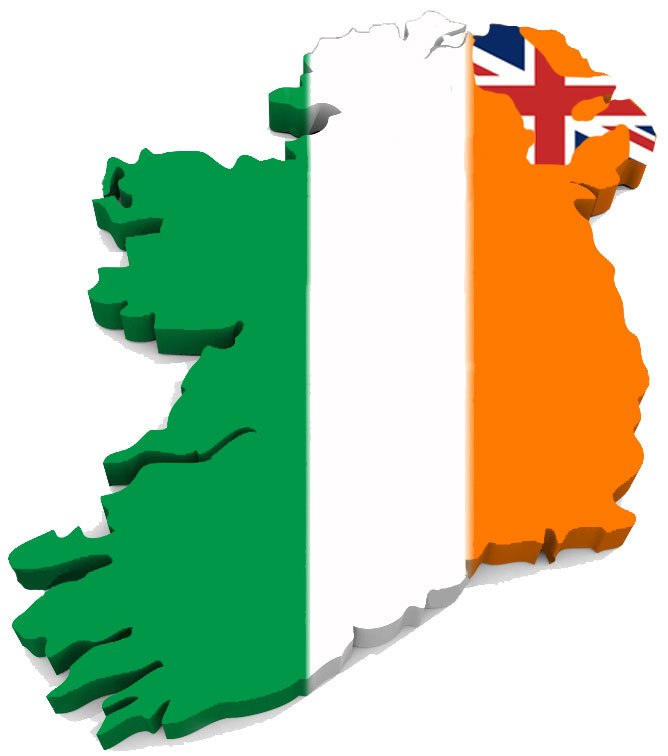
The group-blog “It’s A Political World” has a very good post examining the suppression by the old Unionist regime at Stormont of those local government councils in the north-east of Ireland with majority mandates from the Irish Nationalist community during the early and mid 20th century. Many of the councils had joined the vast majority of public bodies across the nation of Ireland in rejecting British rule and taking their direction from the revolutionary Irish government in Dublin. As the Unionist Chief Whip Major L.E Curran admitted in relation to one piece of anti-democratic gerrymandering enacted in the 1940s by the one-party government in Belfast, its purpose was to:
“…prevent Nationalists getting control of the three border counties and Derry City… The best way to prevent the overthrow of the government by the people who have no stake in the country and had not the welfare of the people of Ulster at heart was to disenfranchise them.”
The ideological and political essence of British Nationalism and Unionism in Ireland from the 18th to 21st centuries summed up in a sentence.
There is an excellent contribution from John Ó Néill below the article which I shall reproduce in full since it echoes strategic arguments that I have put forward myself in recent months:
“The long term impact of this has been a disengagement by nationalists/republicans from electoral processes. If you consider that there has been a recent campaign to convince everyone that even a Catholic majority will not see a vote in favour of a United Ireland. Whether we like it or not, effectively politics comes down a sectarian headcount of sorts as the rise in votes for SF and SDLP has mirrored a rise in the percentage of the population who are recorded as Catholic in the various censuses.
Recently there has been a spate of organisations presenting polls and surveys that are claimed as evidence that “Catholics” don’t want a United Ireland. These include the Life and Times Survey, which is compromised by its own data on party support which is nowhere near the level consistently returned at recent elections (if it can’t replicate that, then what value the responses to its other queries). Or the likes of the LucidTalk poll that asked an indirect question about a United Ireland and offered to ‘yes’ answers and one ‘no’ (to show how weighted the question was, it’s others had significantly more detailed questions and nuanced answers balanced equally between yes/no type options). Some polls (BBC or Belfast Telegraph, I think) even claim to show, via a badly written question, that large numbers of SF voters, I think it was given as 17%, don’t want an united Ireland (which seems completely counter-intuitive). What the last poll did seem to hint at, though, is how far some people when tolerate a status quo for the sake of good relations, even if it is not what they actually want. If that poll is correct that 17% group might represent the pragmatic soft core voters of any particular proposition (I realise, I’ve just culled a largely meaningless statistic out of this, but it’s just to illustrate a point later).
So, in the absence of gerrymandering, the current project seems to be to continue to disengage people and deter them from voting when given the opportunity.
At the same time, SF and SDLP have both been captured by a reluctance to be seen to not work the six county institutions to avoid being criticised by unionists (who paradoxically and shamelessly do their best to render the institutions not fit for purpose). Having been hemmed in by the logic of demonstrating an ability to offer leadership that is not as asymmetrical as that offered by unionism, there has been an absence of energy in pursuing active policies that might create the circumstances in which a united Ireland might be achieved. SF have pushed some projects recently, but ultimately, the current policy is largely to grind out a Catholic majority and wait for demographics to deliver.
There needs to be a reality check for those who advocate a united Ireland and a proper assessment of support for it. One approach would be to ask individual councils to bring forward and vote on a proposition modelled on the lines used by Fermanagh and Tyrone in 1921 (oddly, Churchill’s dreary steeples reference was to the fact that unionists claimed the right to secede and denied Fermanagh and Tyrone the exact same right). This would, in effect, require SF and SDLP to articulate their position here, not probably a problem for SF, but maybe shaky for the SDLP. If councils undertook this vote before the next local elections, it would at least afford voters an opportunity to either endorse or reject the proposal (in their attitude to the parties involved).
While one possible outcome is a debate about re-partition – I don’t believe that London would have any interest in this. Part of the attraction of any united Ireland project to London is getting its expensively maintained Irish real estate of its exchequer books. It isn’t an accident that, with the economic and social fragmentation created by the border, both north and south has suffered as viable economic entities (the north has never been viable, the south only very sporadically). London pays a hefty, non-returnable subsidy of £8bn-£9bn annually to maintain unionism’s vanity project. I believe a realistic prospect of a majority of voters supporting SF and SDLP would be sufficient or London to position an exit strategy, which would include influencing the news agenda and environment in a way that would hasten a favourable outcome. London no longer has a strategic interest in the north, it is simply stuck with the bills. London is where the real paradigm shift will take place.
From a mapping point of view, the number of nationalist majority councils (presuming they all pass a resolution) would demonstrate the extent of support for a united Ireland. In some ways, this would be an democratic outworking of Michael Collins post-partition strategy which was to see nationalist areas remain ungovernable from Belfast and making partition pointless (in the hope that the Boundary Commission would scrap it).
Impetus for a united Ireland project would then bring that 17% pragmatic issue into play. If it becomes more visible that we are entering a transitional phase, those pragmatists close to the middle on the unionists will, at some point, become soft nationalist voters in accepting a new status quo (if they see it as either emerging or imminent). That will be dismissed as idealistic, but it will be dismissed by the same people who are insistent that we accept polls/surveys that claim to show that nationalists behave in that way.
And as to the most obvious point about it being a divisive strategy? The whole ‘Northern Ireland’ project is divisive. Even in its most watered-down forms, it requires an artificial and synthetic identity to sustain it. Its kindest, non-partisan face is simply an exhortation to accept the artificial identity and use that as a mechanism to retain the border and the social and economic dislocation that goes with it. Unionism continually and ever more shrilly insists on the primacy of its values and ideology to underscore that dislocation, to a point that has now clearly alienated many of those from backgrounds that traditionally voted for them. In many ways, And I suspect that the Agreements (from Good Friday to St Andrews) are in danger of becoming the new Boundary Commission, in the sense that working (and being seen to be good citizens in working) the Agreement institutions is distracting from the strategic goals that nationalism and republicanism espouse.
In short, I am suggesting that we can take lessons from the period around 1921 and demand that nationalist and republican councillors take a lesson from the dreary steeples of Fermanagh and Tyrone and:
– notify their intent, via a vote at local council, to secede once they are in a majority
– to do so before the 2014 local elections
– if successful, to note continued support after the same elections
I think it is a message London will want to hear.”


interesting read but i would not make presumptions about london having no interest in re partition. The claim that ‘britain has no strategic military or self interest’ still has to be tested, the only test of value is a boarder poll that achieves a majority vote for renunification. If they abide by it then that is the only proof their word has value, personally i would not be surprised if they decieve. Never forget that britain has a monopoly of violence in these islands and given the rules of the social contract that monopoly in real politic has allowed it and does allow it and will allow it to do what it wants despite the many many objections and calls to reason over the years past and to come, they have had to be dragged for every single crumb they have ever concedded, thats their nature and until that vote happens and i see it with my own eyes i think its best to presume that that will always be their nature.
LikeLike
I tend to agree on the need for caution. In fact I fully expect both the Unionist and British political leaders to renege in some form on the agreements given since the Belfast Agreement (or indeed the precursor Anglo-Irish one) when a majority vote for a reunited Ireland in the north-east takes place. Some legal or political slight of hand will be attempted, some rewriting of the rules. The expected consequences of that are obvious. The War of Independence began with a mandate to uphold Irish democratic values as expressed in 1918-19, just as the crushing of the civil rights in 1968-69 mandated what followed. The British will be responsible for any future conflict as much as for all the past ones.
LikeLike
London will not be in a position to renege on the GFA, at least not without Washington’s permission, which will be unlikely to become forthcoming. One of Dublin’s diplomatic coups of the 20th century was to successfully internationalize the conflict in the North of the country and one of the beauties of the GFA is that Washington is directly involved.
A Nationalist majority – by 2020 at the latest – will be a major game-changer and will fundamentally change the dynamic in the North. An increasing number of moderate unionists realize this and see the inevitability of a re-United Ireland – and it does not overly bother them in the knowledge that there is nothing to fear.
It’s all good.
LikeLike
I certainly hope you are correct but I would still wager money on an attempt by the British, under Unionist and right-wing domestic pressure, to change or alter the outcome of a vote in favour of reunification. I just cannot imagine the British accepting such an outcome without an attempt at some form of political and constitutional chicanery. At the very least expect some lobbying for joint-sovereignty.
LikeLike
Joint sovereignty is a non-runner. All the road-blocks to a Re-United Ireland have been removed – no London or unionists veto to a Re-United Ireland. With a Nationalist majority by 2020 in the North – and increasing with each subsequent year – Nationalists can continue to dismantle the North whilst simultaneously expanding the North-South bodies under the GFA – all the while sending the bill to London. Nice work if you can get it, I would say.
I genuinely do not see what kind of pressure unionists can exert on London to reverse this – they tried to wreck Belfast city centre over losing a democratic vote in BCC on the union flag issue – but were told that their subsequent behavior was “grotesque” by a Conservative Party front-bencher (Teresa Villiers). When the people who put food on your table tell you publicly that your behaviour is grotesque, it would seem to be a clear sign that the relationship is rather strained.
By 2030, the unionist community could well dip below the 40% mark in the North – and 10% in the entire country. Many unionists themselves see this and know that a Re-United Ireland is inevitable.
Steady as she goes.
LikeLike
london have a veto the comon name for them is an army, airforce or navy. if they choose not to use them then a united ireland is a good bet this century based on demographs.if they change the rules again they do have and its delusional to believe other wise the ‘veto’ to give the lie effect.
the gap has narrowed by .3% per yer 3% per decade on average looking at cencus and guesstimates during boycotts since the 1950’s.
LikeLike
washington will not go to war for ireland, london has many times gone to war for ireland. They see us as their spere of influence they believe they have rights and in the past have killed to defend them, what has changed? Maybe Defending those rights over the natives is different to denfending those rights over another imerpial power are washington that interested, where is the evidence, do we want them to be? In terms of londons approach to ireland the narative may suggest a change of thinking but extrapolating information based on activity suggests a different story. To believe that if the day comes that when nationalist ireland clears londons latest challange and gets a majority in the six counties that london will leave is to believe that london has no strategic millitary or ecomonic interest in ireland, that they are here for some aulturistic motive and that may well be the truth of it, they may desire to leave but where is the evidence for that, they say it, but in there actions where is the proof. Is it in selective internment that acts as provocation to republican families and communities, is it in the setting of old scores in aresting old republican combatants. Is it in Dublin being a bit player at the haas talks, is it in the hyper neccessity for SF to accept symbols of the occupation in terms of the ‘law’ and the so called police or that the english monarach is some benie figure in ireland, is it in ihe GFA which could have been a lot greener if that was their true desire. The war goes on in a different form, i think its best to be cautious when dealing with london, if i am wrong great but if i am right we are screwed again.
Unionism appears to be moving to a defencive position which is no surprise bar NI21 which at the moment is a bit player in that community shows to be in the same thinking mode that has existed in that community since the early 19h century island wide, only positive in that is that as time moves on its area of influence geographicly is getting smaller and smaller.
LikeLike
yeah in the long term iam sort of glad they didn’t go for joint soverienty, There role could have been narrowed down if joint authority came in but in the event of a nationalist majority how would it be iradicated? if the premise is both claims are equal then that would be true wether nationalism is a minority or a majority, i had a suspission that unionism looking at changing demographs would have gone for that position to secure some role for britain long term but they didn’t, they may conceed to it soon though. its all a game of chess, when britain said they had no strategic long term interest in ireland the game is to keep norrowing that role down, hasn’t happened, mi5 probably in a stronger position with in the context of devolution of policing and justice, finance largly the same, only move for nationalism is that vote but even in that read the GFA st andrews and various legistation who writes the question for the vote, its not clear, is it westminster, is it between stormount and leinster house, maybe the most favourable position is to get rid of power sharing in the north, about a decade of unionist rule, when nationalism is in a majority in the north then nationalism north and south write the question, that could be hypotetical though, stormount looks shakey at the moment and may not be around for much longer.
Unionism has always been about holding aline some want to return to a mytical past, some live at the status quo and some are prepared to move a bit if it means stability. battles with in unionism has always been between these tendencies. The history of Dublin loyalism is the present of belfast loyalism.
LikeLike
I supported the continued unaltered wording of Articles 2 and 3 within the context of agreed joint-sovereignty but that is another story. A mechanism could have been found to control the movement from joint-jurisdiction to the full jurisdiction by Dublin but unfortunately that opportunity is gone. As it is one could argue that a form of internal joint-sovereignty is emerging between the two respective communities.
To my mind the devolution of policing without the demilitarisation of policing was pointless. An armed paramilitary police force is not an unarmed civilian police service. The PSNI retains its counter-insurgency role which “legitimises” it as a military target. That was an huge failure on the part of Irish negotiators in 1994-2001. They should have insisted on an unarmed police service completely devoid from a counter-insurgency role.
I agree, British Unionism in Ireland as a political ideology is clearly in trouble. Let us hope that the more far-sighted members of the British ethno-national minority in the country can see that their community’s long term survival and prosperity can only come through a different form and more progressive form of politics that accepts the inevitability of reunification and their place in it.
LikeLike
1. Articles 2 and 3
In practice, the amended Articles 2 and 3 of Irish constitution make it clear that the Irish nation is STILL spelt out in geographical terms. In practice, if we look at the FAI International soccer team , it represents the whole country and all 32 counties, and this is legally recognized internationally. Marc Wilson, Darron Gibson, James McClean, all from the north-eastern counties of the country, currently play in the National squad by BIRTHRIGHT being born in Ireland.
2. PSNI – it is definitely no armed wing of unionism nor is it under the control of the Orange Order – as was the case for the now disbanded RUC.
A step in the right direction.
3. British unionism is Ireland in trouble – Yep, definitely agree with you there.
I believe when unionists become the minority in the North (2020 at the outside) this will be a major wake-up call within the unionist community at large. I also believe that there are enough pragmatic people in the Unionist community who see that their best long-term interests lie in an agreed independent Re-United Ireland.
Huge progress has been made in the past 20 years – and I remain confident that even more is to come and that a Re-United Ireland is absolutely inevitable.
LikeLike
I agree that the present wording of Articles 2 and 3 maintains the definition of nationhood found in the old wording, albeit in ambiguous terms (I have pointed that out myself), but I would have preferred if the explicit claim had been kept with all the constitutional and moral force it carried.
Yes the PSNI is no RUC but it remains a counter-insurgency focused paramilitary police force (and majority a Unionist one to boot). Policing should have been civilianised and the PSNI disarmed.
Reunification is the inevitable – until the Unionists and British move the goalposts 😉
LikeLike
…”– until the Unionists and British move the goalposts ;-)…”
Yep, I hear you . However, this is the beauty of having Washington underscoring the GFA – otherwise it would be as productive as trying to eat soup with a sewing needle.
I do not see how Unionists nowadays have the capacity to move the goalposts unilaterally – and I do not believe London will try to undermine the GFA without Washington’s permission.
Washington has its own interests viz Ireland – and I do not believe these interests will be furthered by undermining the GFA.
LikeLike
Unionists and their allies in Britain thwarted or altered repeated moves on Catholic Emancipation, Home Rule and independence itself down through the decades. I think the 1921 Treaty (in part), the abrogation of the Unionist regime at Stormont, the 1985 Anglo-Irish Agreement and the 1998 Belfast Agreement (also in part) represent the few times they themselves were defeated in their political ambitions. So we shall see. I suspect that when the 50%+ Yes vote to reunification tumbles out of the ballot box we shall see a return to the type of rebellious militant Unionism that characterised the early 20th century. And I doubt the British will have the political or cultural will to face that down.
I hope I am wrong…
LikeLike
Yes, as you say, we shall see.
However, it is my view that Unionism in Ireland is in an irreversible downward trajectory – if anything this process has accelerated over the past four decades and I do not see any way how Unionists can reverse this process.
LikeLike
Theres three points that I felt like commenting on this above article
Your comment “their cultural and national identity and want the best for everyone living in Northern Ireland.” is trying to create a respect purpose or a civil right for Loyalist sectarianism. Their bands and all they represent is blatant ,hate fuelled Sectarian bigotry. Trying to dress Sectarianism as an accepted culture is similar to a cultural right for KKK etc. Although Loyalists have aligned themselves with these white sheet covered brethren in the past
Secondly using this child Jamie as their front is outrageously ridiculous in every fashion and quite clearly a representation of .
true Loyalism, They are nothing and of no use to Britain`s dirty war anymore.
Thirdly the Union flag protest is a set up for these Loyalist idiots to react as they have.This will make it easier to banish them or isolate silence their communities. By all accounts the plan is working and a few more removals of god knows what should have them sorted. The rerouting of their Parades etc should get a good enough reaction too.
Every argument they have can be destroyed, with logical questions to them, receiving no answer or some nonsensical reply. Their ingrained mindsets of hatred, bigoted, Sectarianism displays their true Cultural and nomadic Identity. The real Unionists have a right to their cultural British identity going back 17th century. Many copped themselves on to their Sectarianism seen reality.They plus an increasing number of Nationalist/Catholic/ false pretense Republicans will save the Union from becoming United with whatever this modern Free State Ireland is. Its not the Ireland that inspired romantic,lamenting poetry ,songs or what many past Patriots died ,suffered for.
I cannot see a United Ireland being a reality for many non political ,patriotic reasons .Loyalist Sectarian threats or their low numbers of Orange Unionist puppet masters manipulation will be silenced. Another few Willie Fraser /Brysons type brainless ,nomadic culture-less nonsense should end that.
There are two main Communities here that have differences regarding ,Identity, Cultural ,Religious persuasions that will take charge of Northern Ireland`s Six Counties future welfare and destiny . Its also most likely that all of UK`s present countries will become federal l united states of Europe.
LikeLike
there have been times in the past centuries to the present day when london moved against ‘unionists’ banning marches procribing the orange order etc, when looked at through the eyes of southern unionism partition itself and the 21 treaty was a betrayal of them. Northern unionists saw the anglo irish agreement as such etc. there is a view that unionism has some hold over london that to break unionism is to break the occupation. i am not sure that stands up to scrutiny, not that its not important but its not the main plank of the occupation. yes at times the interests of london and unionism have been the same but that is not the same as london being lead by them, more like unionism has in the past been of use and when they are not they are ignored and at times attacked. repeatedly london has shown that it makes its own decisions, each decision they have ever taken in Ireland has been in the context of making ireland managable short of leaving, thats the important point, every move they have ever made has been in the context of them remaining.
If unionism becomes a minority there is propaganda value in that for republicanism but for london they can say ‘so what’ in real terms under the vail of some humanitarian justification as they do where their army is stationed else where. don’t count your chickens before they have hatched, alot of the analysis on this issue around the country presumes that the brits see us as equals and that their word has some value.
LikeLike